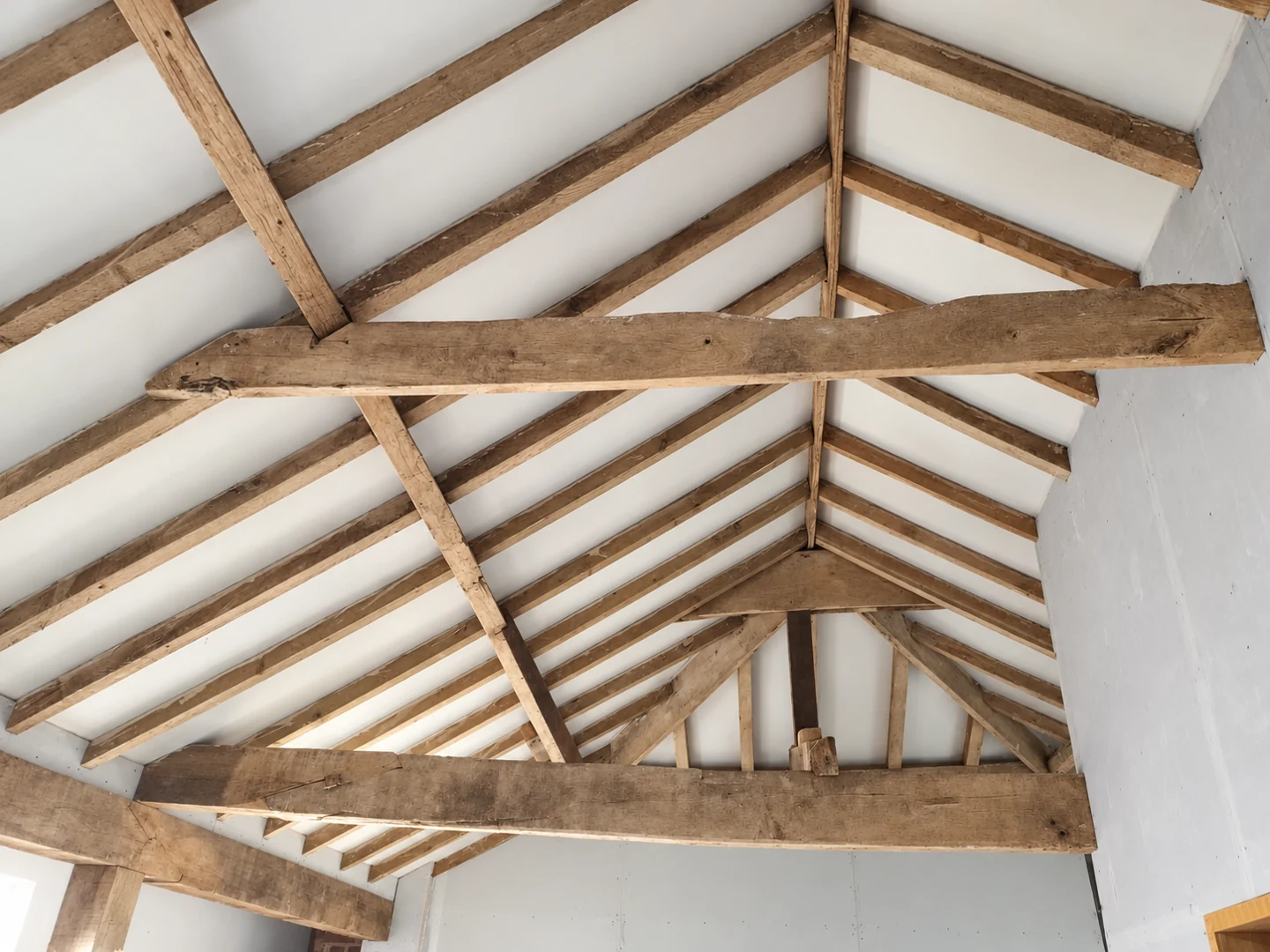
Drive through Suffolk or Norfolk for any length of time and you notice something much of the country has lost: buildings that still look as though they belong to the ground they stand on. Pink-washed cottages, clay-lump farmhouses, timber-framed halls with plaster panels between the studs. None of it is accidental, and very little of it was ever built with cement in mind.
East Anglia built the way it did because of what was, and wasn't, to hand. That history isn't just interesting. It explains why so many of these buildings now suffer from well-meant but unsuitable repairs.
A region with no stone to spare
Unlike the Cotswolds or much of the West Country, Suffolk and Norfolk have very little good building stone. What the region had instead was chalk, clay, flint and timber. Builders worked with what was underfoot.
Chalk was burned in local kilns to make quicklime, which was slaked and mixed with local sand for mortar, render and plaster. Flint, plentiful in the chalk, became a building material in its own right, bound with lime mortar in the flint walls you still see on churches and farm buildings across both counties.
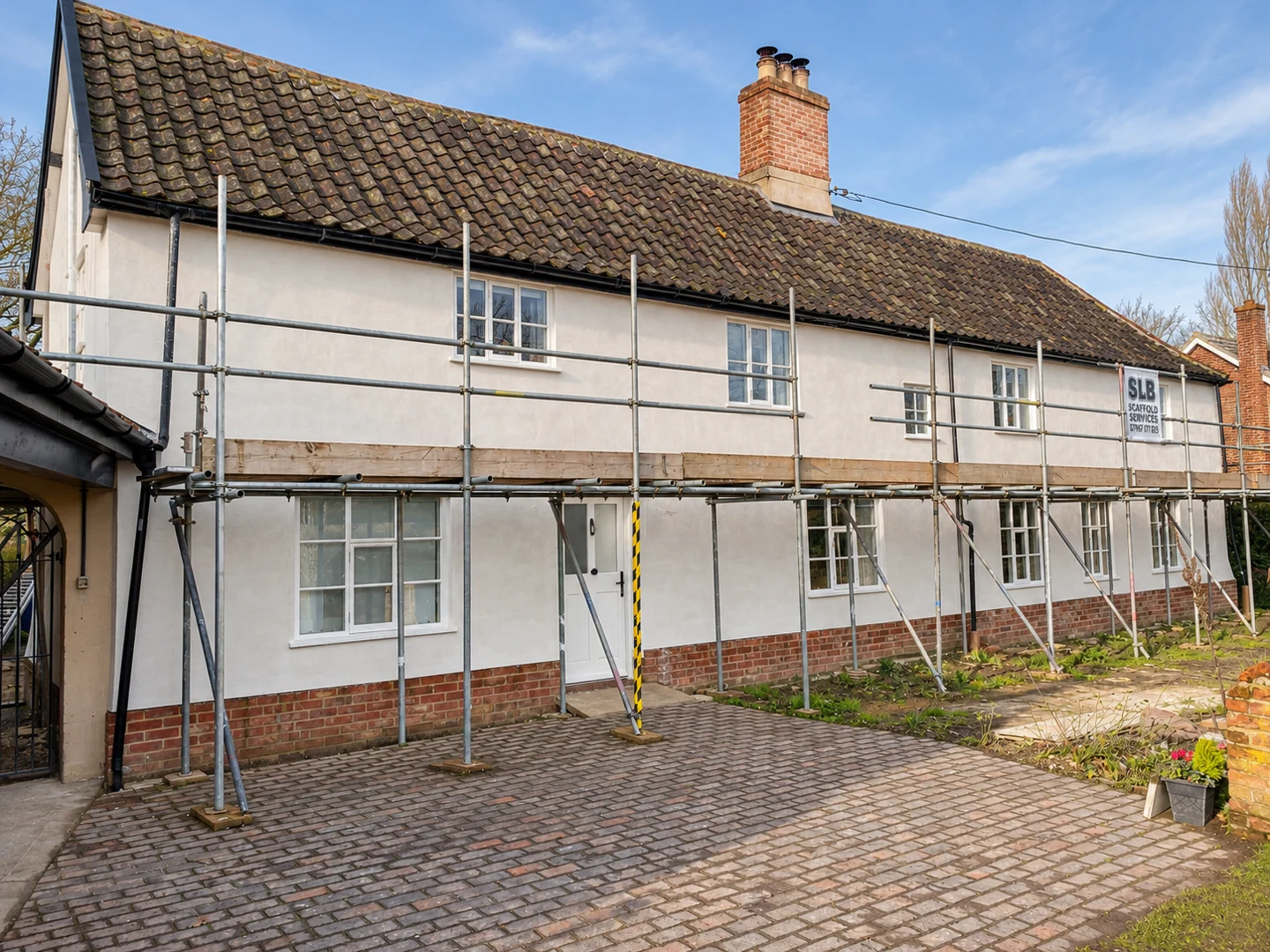
Where there was no stone at all, builders turned to clay lump: unfired blocks of clay and straw, dried and laid like oversized bricks, then rendered and limewashed for protection. Clay-lump cottages are still common in south Norfolk and north Suffolk, and they depend on a breathable lime finish to survive.
Timber frame and the lime panel
Suffolk and Norfolk are among the richest timber-frame counties in England. Wealth from the medieval wool trade built substantial framed houses and barns, many still standing. The panels between the studs were traditionally wattle and daub, later lath and plaster, and both were finished in lime, never gypsum.
That matters more than it sounds. Timber frames move. They swell, shrink and settle with the seasons in a way solid masonry doesn't. Lime plaster has the give to move with the timber without cracking badly. Gypsum and cement don't, and panels finished in modern materials tend to crack along the frame within a few years.
A timber frame doesn't need a rigid skin. It needs one that can move with it.
Pargeting: East Anglia's own decorative lime
Few visitors to Suffolk leave without noticing pargeting, the raised and patterned plasterwork on the outside of timber-framed houses, especially in towns such as Clare and Lavenham and just over the Essex border in Saffron Walden. It reached its height in the sixteenth and seventeenth centuries and is made entirely of lime plaster, combed, pressed or modelled while still workable.
It is a reminder that lime here was never purely practical. It was decorative and regional, and a point of pride for the craftsmen who applied it. Repairing pargeting today takes the same patience and understanding of the material as the original work. There is no modern shortcut.
Why this still matters on site
The practical upshot is simple. A great many older buildings in Suffolk and Norfolk were built without cement, and many without fired brick at all. Clay lump, chalk, flint and timber frame share one need: they have to breathe.
When a repair puts cement render or gypsum plaster on one of these buildings, moisture that used to evaporate harmlessly through the wall is trapped instead. Over time that does far more damage than the problem the repair was meant to fix: frost damage, decay in the timber frame behind the plaster, and clay lump that crumbles because it was never meant to hold water against itself.
What we do differently
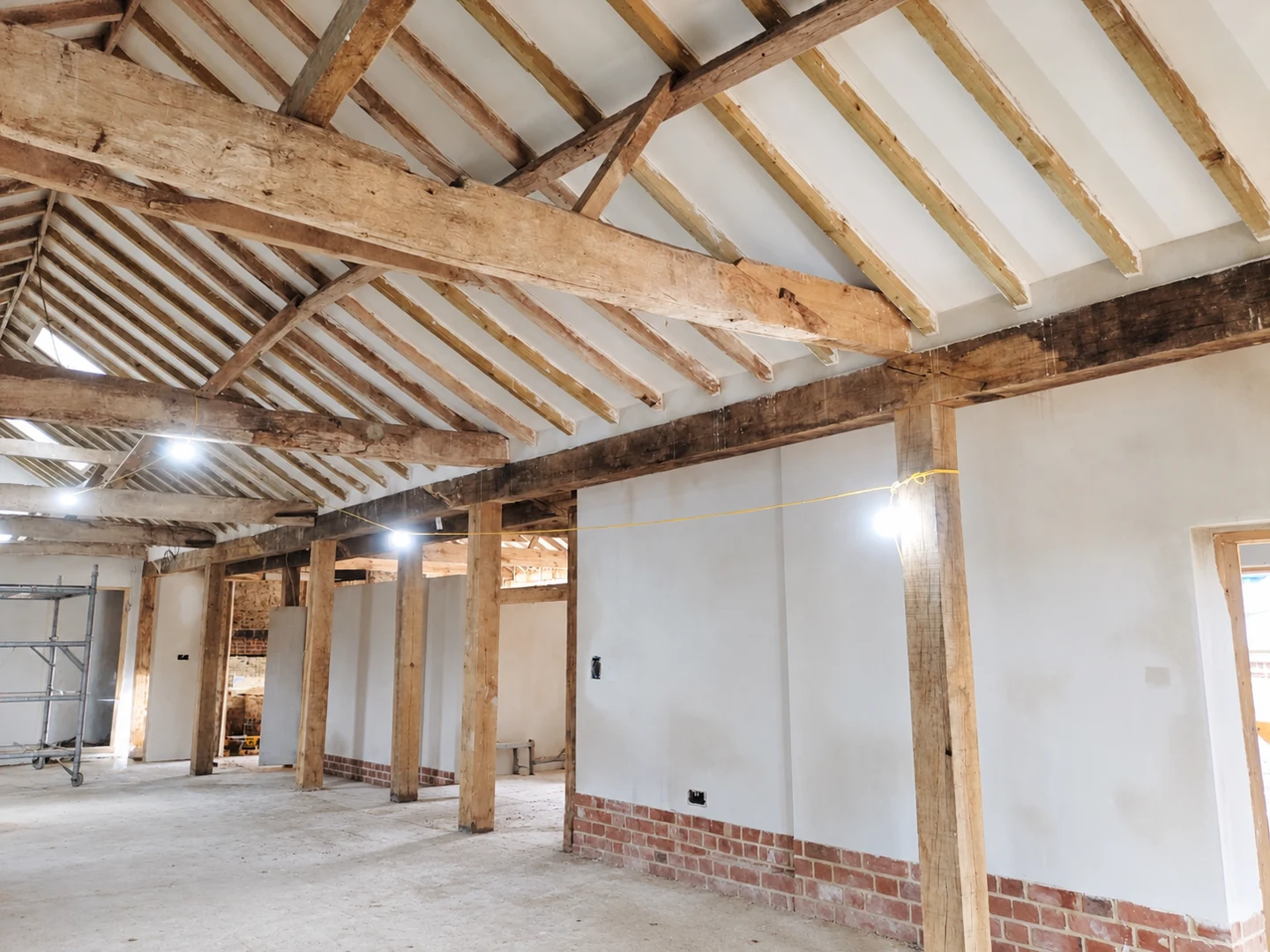
Every lime job starts with understanding what is actually in the wall. Two cottages on the same street can be entirely different underneath: one timber frame with lath, the next solid clay lump under old render. We assess before we specify, because the wrong lime on the right wall still causes problems.
For listed buildings, that assessment becomes the basis of what goes to the conservation officer. For unlisted homes it is simply good practice. The building doesn't know it isn't listed, and it needs the same breathable approach to last another hundred years.
Whether it is a listed farmhouse or an unlisted cottage with solid brick walls, the same principle holds across Suffolk and Norfolk: let the wall do what it was always meant to do, and it will keep doing it for another century.