One of the most important characteristics of traditional building materials is their ability to manage moisture.
Unlike many modern construction systems, older buildings were not designed around completely sealed wall assemblies. Materials such as brick, stone, timber and lime mortar work together, absorbing and releasing moisture as environmental conditions change.
This is particularly important when considering external render.
How lime render manages moisture
Traditional lime render is a capillary-active material. Its interconnected pores allow moisture to move through the material in liquid and vapour forms.
When rain reaches an external wall, an appropriately specified lime render provides a protective finish that helps limit water penetration into the underlying construction.
Any moisture absorbed by the render can subsequently evaporate as the surrounding conditions become drier.
This process of wetting and drying is an important part of how many historic buildings perform.
Historic England identifies this characteristic as one of the benefits of traditional lime renders and limewash finishes, particularly where they protect rubble masonry and timber-framed construction.
Why material compatibility matters
Problems can arise when traditional walls are covered with materials that significantly restrict their ability to dry.
Certain dense cement-rich renders and impermeable coatings can prevent effective evaporation. Where water enters through cracks, defective junctions or other sources, moisture may remain within the underlying structure for longer.
In timber-framed buildings, persistent moisture is particularly concerning because prolonged damp conditions can encourage timber decay.
Lime render is not a substitute for maintaining roofs, gutters and drainage, but selecting a compatible finish is an important part of protecting traditional construction.
An example from our work
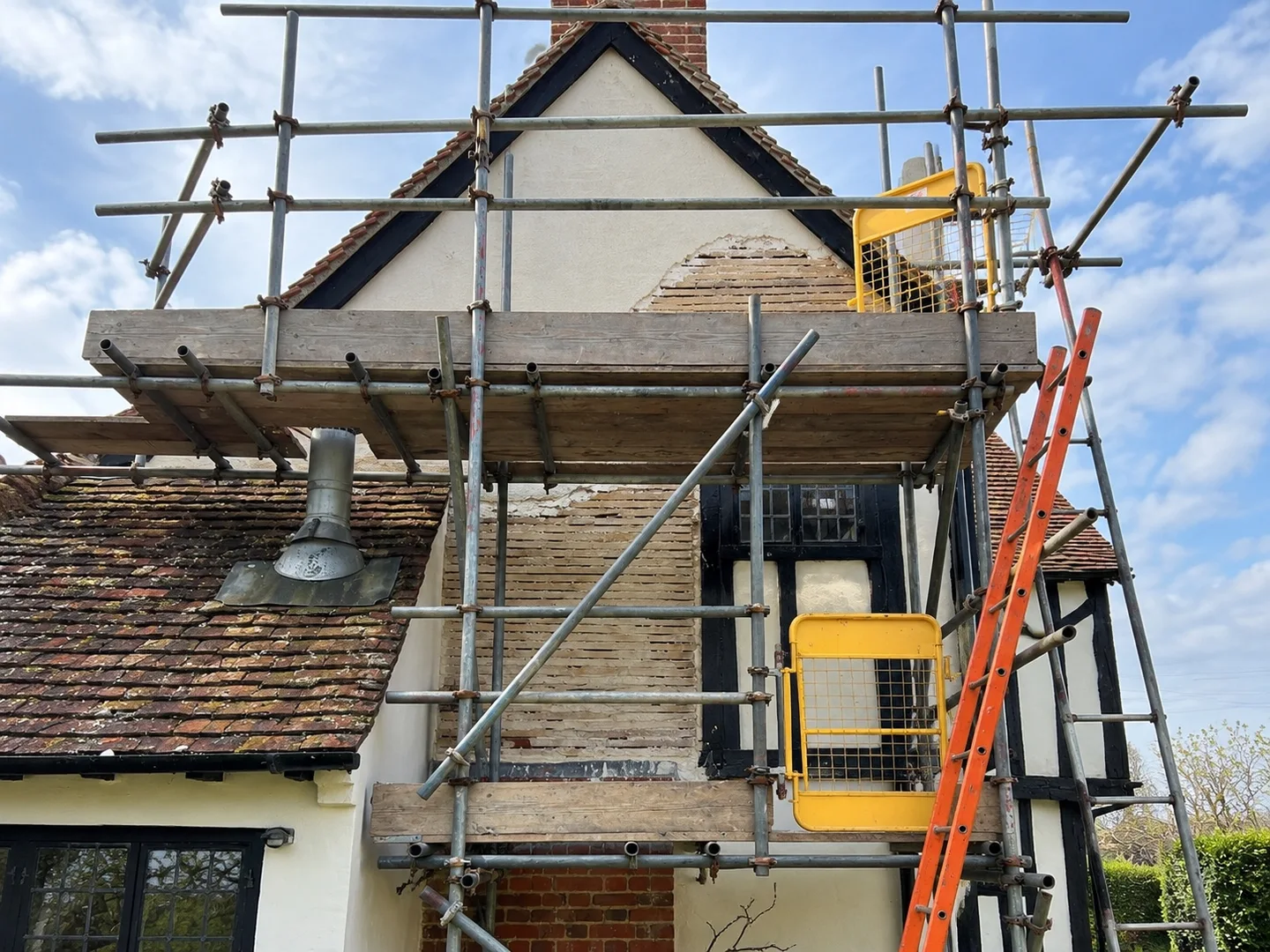
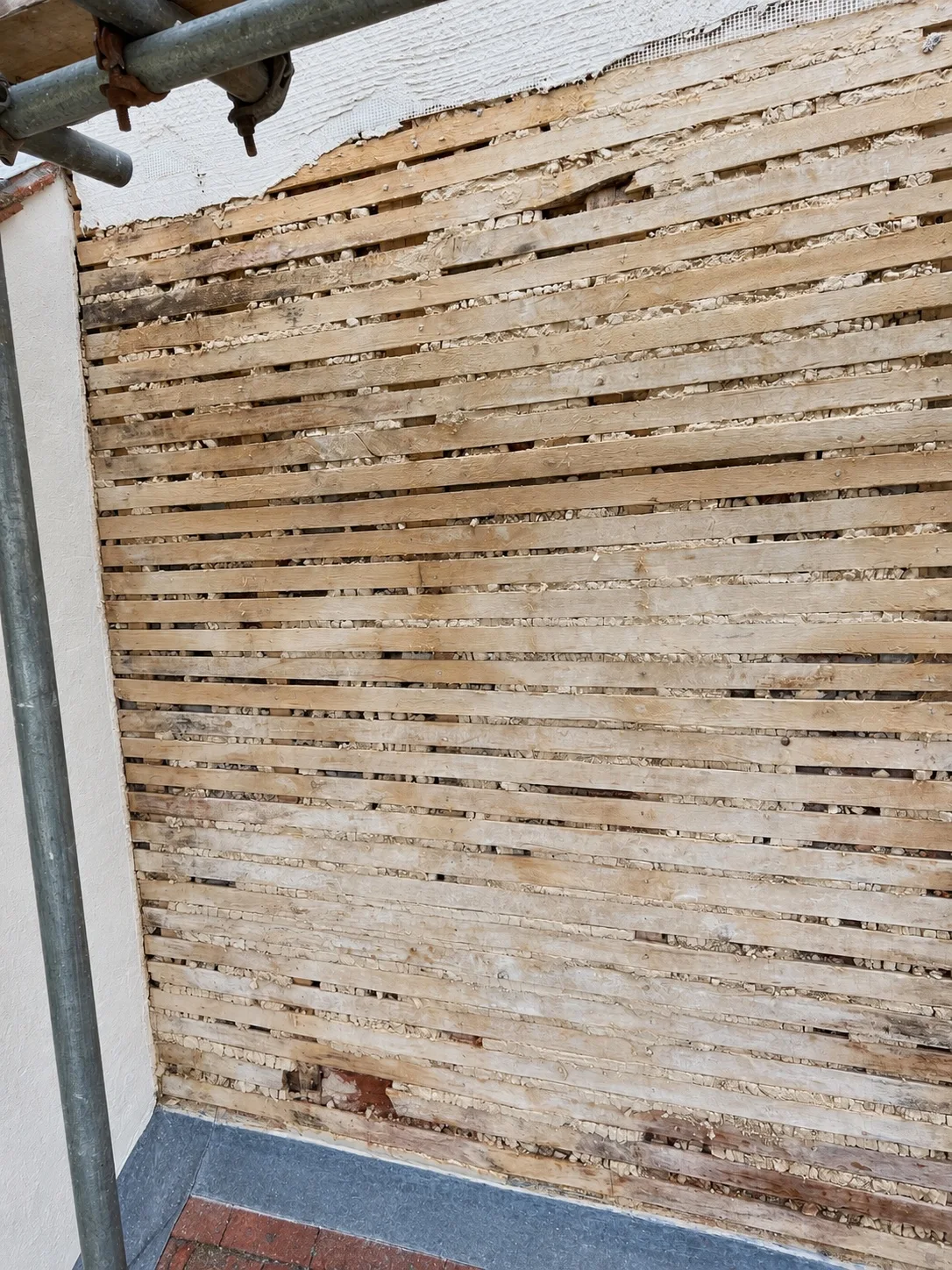
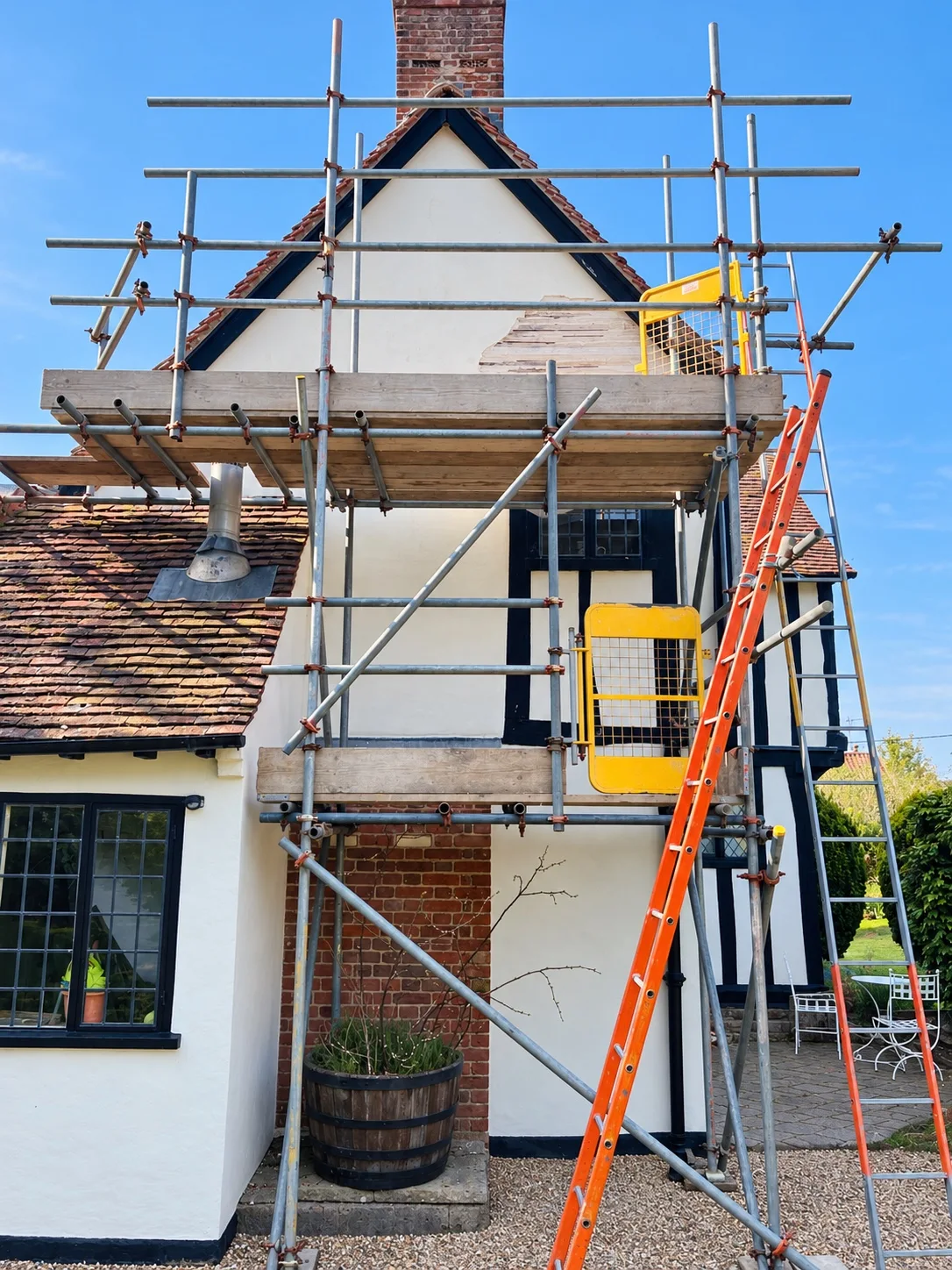
Our work on the gable at Dutch House involved traditional timber laths and lime render — a practical example of a construction method that remains relevant to the care of older buildings.
Photographs taken during the work show the lath background and subsequent application of the render, illustrating the craftsmanship behind a finished surface.
The principle is straightforward: conservation materials should be selected not only for their appearance, but for the way they interact with the building beneath them.
Further reading
Historic England — Properties of Traditional Building Construction