Selected projects / Heveningham, Suffolk
Traditional Lime Plasterwork at St Margaret’s Church, Heveningham
A quiet contribution to the continuing story of one of Suffolk’s historic parish churches.
Grade I Listed Church · Heritage Lime Plastering · Heveningham, Suffolk
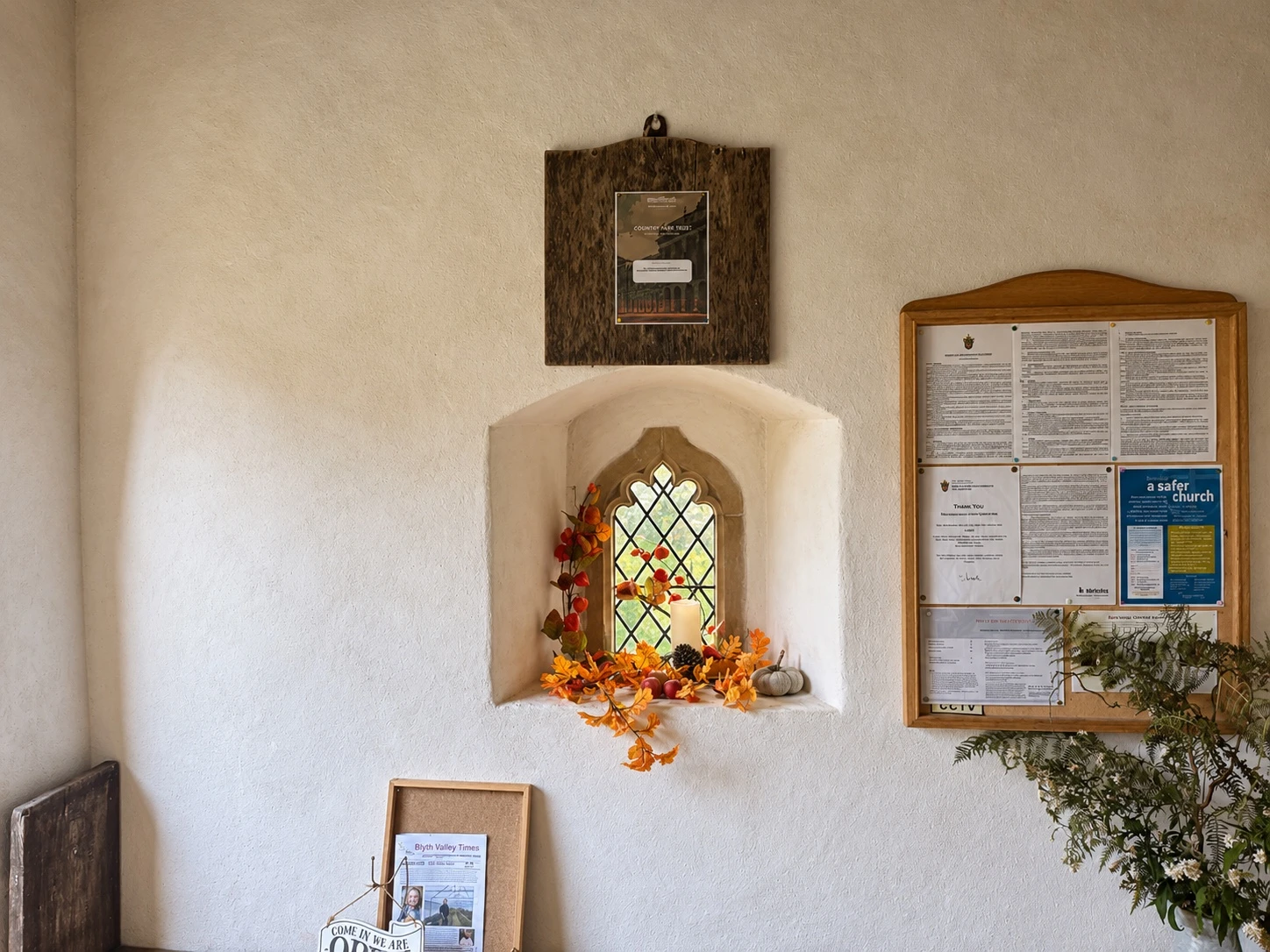
There is something particularly special about working within a building that has stood at the heart of its community for centuries.
At St Margaret’s Church in Heveningham, generations have passed beneath the same ancient arches, leaving behind a remarkable collection of architectural details, craftsmanship and local history.
Our work here focused on the church porch, a modest but characterful space where traditional lime finishes sit alongside weathered timber, historic stonework and delicate leaded windows.
It is the sort of setting where good craftsmanship should feel entirely at home — considered, sympathetic and never competing with the building itself.
01 / The church
A Church with Centuries of History
The history of worship in Heveningham reaches back to the Domesday Survey of 1086, which records a church in the settlement.
The present St Margaret’s Church is predominantly medieval, with a 14th-century chancel, a 15th-century tower and porch, and a remarkable early 16th-century double hammerbeam roof.
Its walls tell a story of changing architectural traditions. Flint and stone rubble sit alongside later brickwork, while inside, carved timber details, medieval fittings and historic plasterwork reflect successive generations of craftsmanship.
The church underwent significant restoration during the 19th century and is today recognised as a Grade I listed building — a designation reserved for buildings of exceptional architectural or historic interest.
Among its more unusual surviving features is a medieval wooden effigy, believed to represent a member of the Heveningham family, whose connections with the village stretch back hundreds of years.
These details are what make places like St Margaret’s so distinctive. They are also a reminder that any work undertaken within such a building must respect far more than its immediate appearance.
02 / The materials
Traditional Materials for a Historic Setting
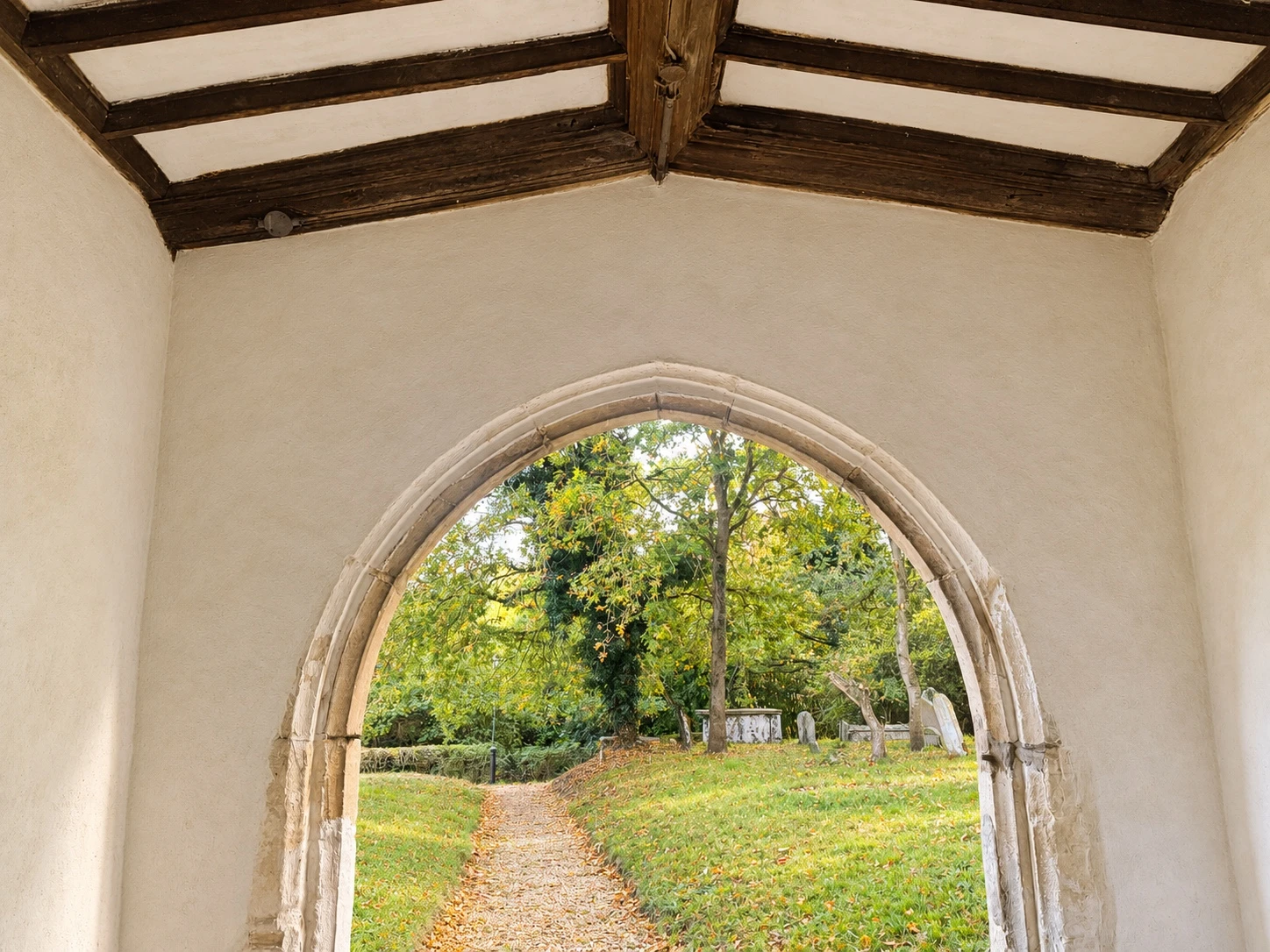
The church porch provides a gentle transition between the surrounding churchyard and the historic interior.
Beneath its dark timber roof, softly finished plastered walls surround a small Gothic window, while the pointed stone entrance arch retains the irregularity and character of traditional construction.
It is a relatively simple space, but one in which the relationship between materials is particularly important.
Traditional lime plaster is well suited to many older buildings because it can accommodate moisture movement and drying within historic masonry. Unlike harder, less permeable modern finishes, appropriately specified lime plaster can work alongside the materials and construction methods with which these buildings were originally formed.
Just as importantly, lime creates a distinctive visual finish.
Its subtle texture, softness and natural variation are particularly appropriate to places where the objective is not to make old walls look newly built, but to retain their architectural character.
03 / The finish
A Finish That Belongs
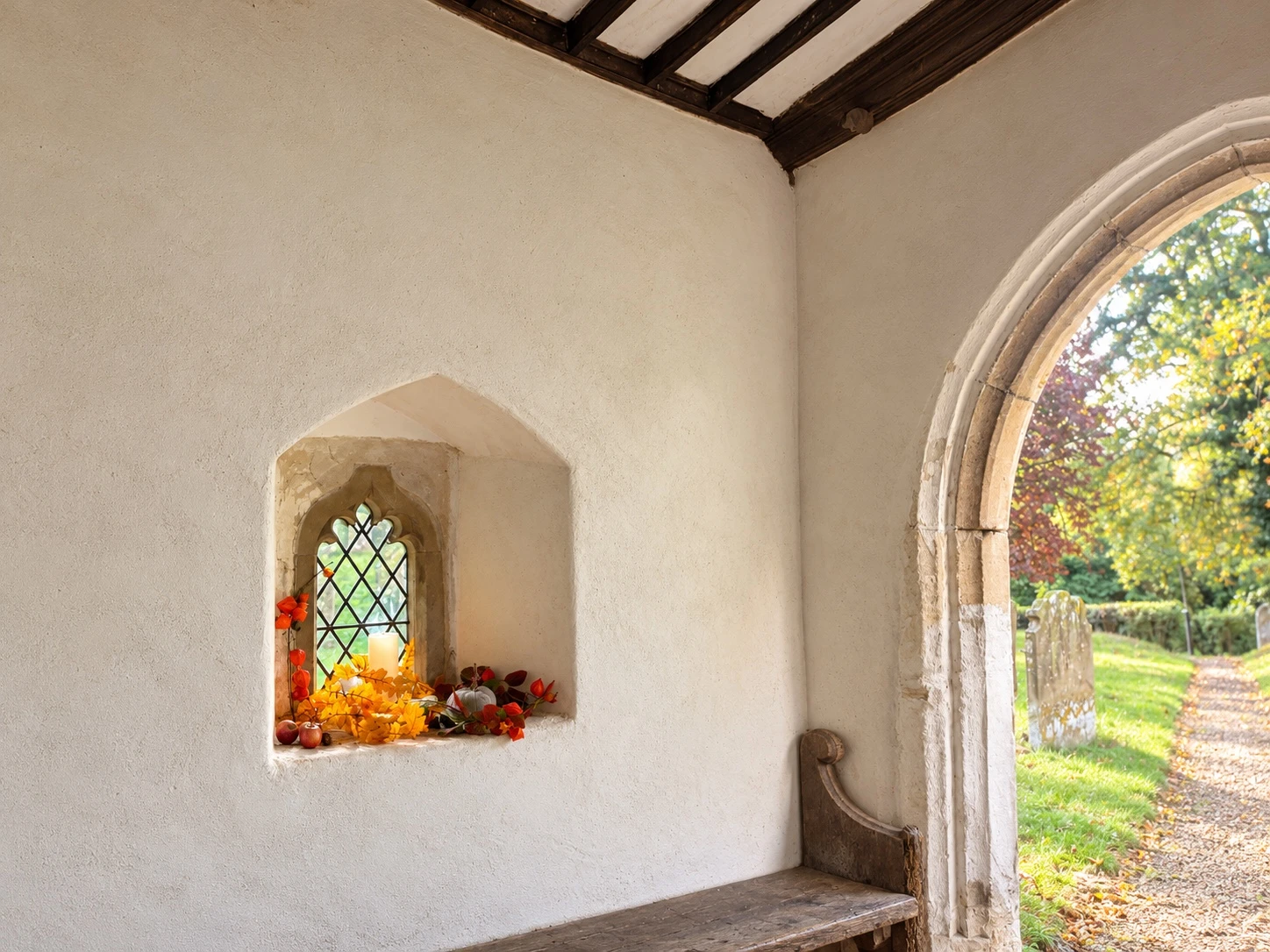
At St Margaret’s, the beauty of the porch lies in its simplicity.
The softly textured plaster complements the weathered timber above, the stonework of the doorway and the deeply recessed window openings. The resulting surfaces provide a quiet backdrop to the historic details rather than drawing attention away from them.
There is no need for perfect uniformity in a building of this age. Its gently irregular surfaces, changing light and evidence of earlier craftsmanship are all part of its character.
Our approach to traditional lime plastering is informed by that same appreciation for older buildings — understanding how materials should perform, while recognising the importance of a finish that feels appropriate to its surroundings.
04 / The craft
Continuing a Tradition of Craftsmanship
For centuries, lime has played an important part in the construction and maintenance of Suffolk’s churches, farmhouses, cottages and historic buildings.
Its continued use is not simply about preserving an appearance. It is about understanding the materials from which these buildings were made and helping them remain in good condition for future generations.
St Margaret’s Church is a reminder that heritage work need not be grand in scale to be meaningful.
Sometimes, the most considered contribution is one that settles quietly into its surroundings, becoming another small chapter in a building’s much longer history.
Traditional Lime Plastering & Heritage Conservation in Suffolk
Suffolk Lime Plastering undertakes traditional lime plastering, lime rendering and sympathetic restoration work on historic and period buildings across Suffolk and East Anglia.
Whether caring for a listed property, restoring a traditional farmhouse or undertaking sensitive repairs to an older building, we bring an appreciation of traditional materials and craftsmanship to each project.
Discuss your heritage project with Suffolk Lime Plastering