Earl Soham, Suffolk · Heritage restoration · 2023
The Bakehouse
A considered approach to traditional lime rendering in the heart of rural Suffolk.
A project close to home
Buildings that tell the story of a place
There are certain villages in Suffolk where the buildings themselves tell much of the story of the place. Earl Soham is one of them.
Just a few miles from Framlingham, this lovely village has kept much of the architectural character and independent spirit that make rural Suffolk so special: timber-framed buildings, traditional plastered façades, old brickwork and historic cottages alongside village businesses that remain part of everyday life. It's the kind of place we particularly enjoy working.
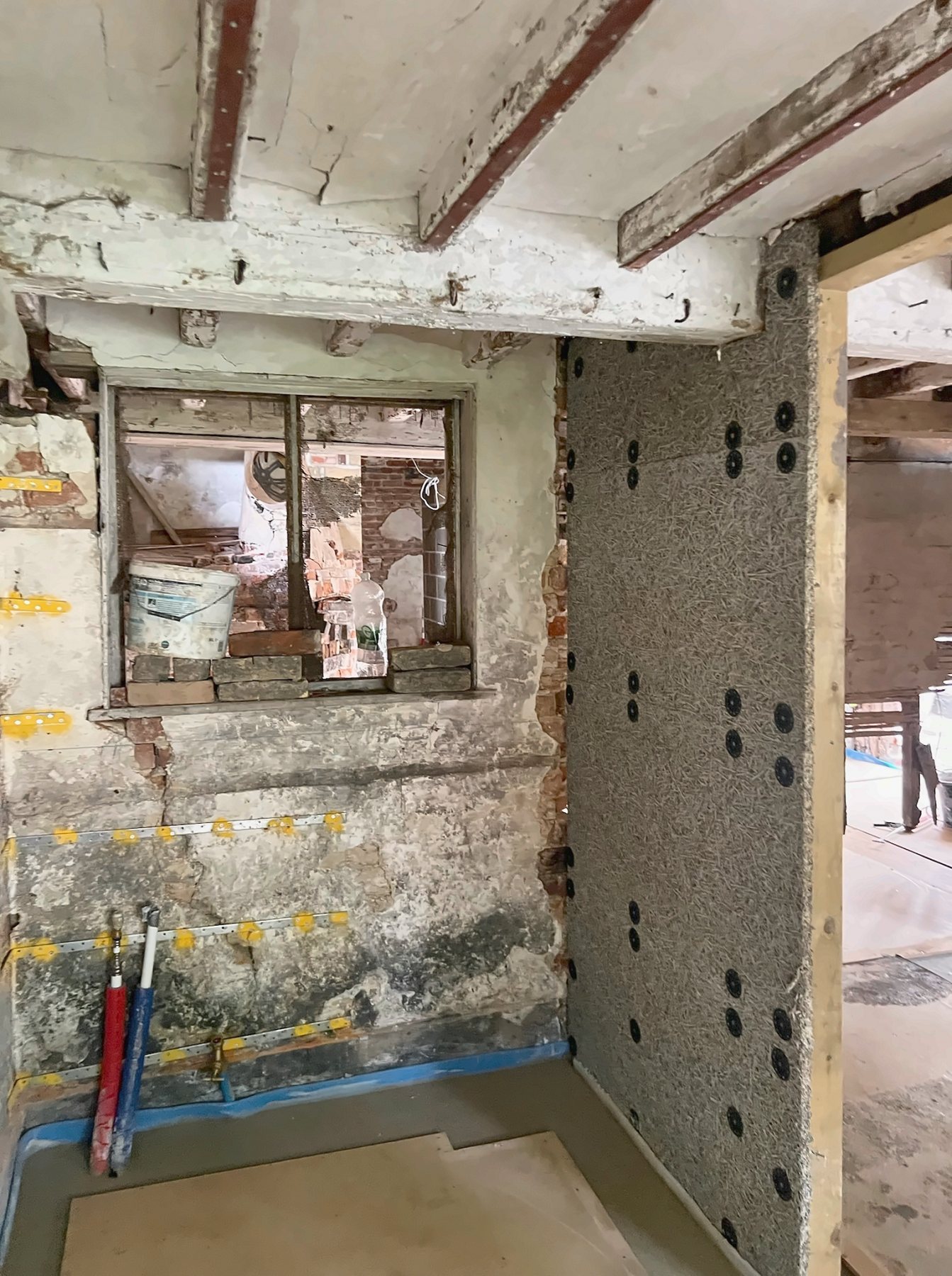
In 2023, we contributed our lime rendering expertise to the restoration known as The Bakehouse. Working as part of a wider restoration, our responsibility was a two-coat lime rendering system, incorporating reinforcing fibre mesh, applied to the prepared fibre-boarded walls.
The work itself was relatively simple to describe. Carrying it out properly was anything but — which is exactly why traditional plastering remains such a valuable specialist craft.
Understanding the building before the finish
Working within an older building needs a different mindset from plastering a straightforward modern interior. Traditional structures are rarely straight, square or uniform. Timber framing can have generations of natural movement behind it, while adjoining masonry, old plasterwork and newer materials may all behave differently.
That's part of their character, and understanding it is essential when introducing new finishes. A beautifully finished wall should never look out of place against an old oak beam or a section of historic brickwork — and what sits beneath the render matters just as much as what you see.
Working over fibre-boarded walls
A boarded background can give a practical surface for a plastering system within a refurbishment, but it needs careful thought. The boards must be secure and suitable for the chosen render, and every joint, edge and change in surface has to be accounted for to create a continuous finish.
Openings, changes in direction and junctions with neighbouring materials need particular care — that's where stresses concentrate and imperfections tend to show. The aim isn't to force an old building into a perfectly manufactured box, but to create well-finished surfaces that sit comfortably within its existing character.
03 · Why we incorporated reinforcing mesh
The detail you'll never see
When plastering across a background made up of individual boards, the joints between them can become points of weakness. Small differences in movement may eventually show as cracks through the render.
Reinforcing mesh, embedded within the appropriate coat, spreads those stresses more evenly through the render layer and adds resistance to cracking. Once the finishing coat goes on, it becomes invisible — yet it plays an important part in how the finished wall performs.
The mesh isn't there to hide structural movement or make up for an unsuitable background. It's one part of a properly specified rendering system.
04 · The two-coat lime rendering process
Built up in stages, never rushed
Prepare the background
Boards secure and suitable, with joints, openings and junctions with older materials checked before any render goes on.
First coat & mesh
The first coat establishes the rendered background, with reinforcing mesh properly embedded within it — not simply lying against the surface.
Second coat
Built on that preparation, covering the reinforcement and producing a continuous, well-bonded finish.
Timing between coats depends on the lime product, the background and the conditions in the building. Temperature, ventilation, humidity and how fast moisture leaves the material all matter. Letting the render develop properly is part of the process, not an inconvenience to rush past.
"The contrast between old and new can be beautiful when it is handled with restraint."
The details make the difference
Large, uninterrupted walls can look deceptively simple once finished. In practice, much of the skill lies in the details: bringing a lime finish neatly up to an irregular structural timber, keeping clean lines around openings, and achieving a consistent surface across different areas.
In an older building, exposed timbers and original masonry are often the strongest architectural features. We believe plasterwork should complement them, not compete with them — and there's a particular satisfaction in seeing fresh, pale lime alongside naturally weathered timber and traditional brick.
Why lime remains relevant
Not a museum material
Lime is sometimes thought of as purely historic, but its qualities keep it relevant to sensitive refurbishment. Appropriately specified lime plasters and renders can offer vapour permeability and moisture buffering that suit many traditional buildings.
Older structures rely on a different relationship between materials, ventilation and moisture from modern construction. Introducing hard or impermeable finishes without understanding that relationship can cause problems — which is why careful material choice matters so much in conservation work.
The pleasure of working in Earl Soham
A village with a genuine sense of place
Earl Soham's historic buildings and long-established businesses — the well-known Huttons butcher's among them — are reminders that a community's character is shaped by more than its appearance. We value working where traditional craftsmanship is still appreciated, alongside restoration contractors who share our respect for Suffolk's built heritage.
Looking after the buildings that make Suffolk special
Respecting the past, without closing off the future
The Bakehouse brought together a modern prepared background, a reinforced lime rendering system and everything that comes with working in an older property. The finished surfaces are only one part of the story; behind them are choices about materials, preparation and how new work relates to the original building.
Traditional lime plastering, careful craftsmanship, and a genuine appreciation for Suffolk's historic buildings.
A closer look
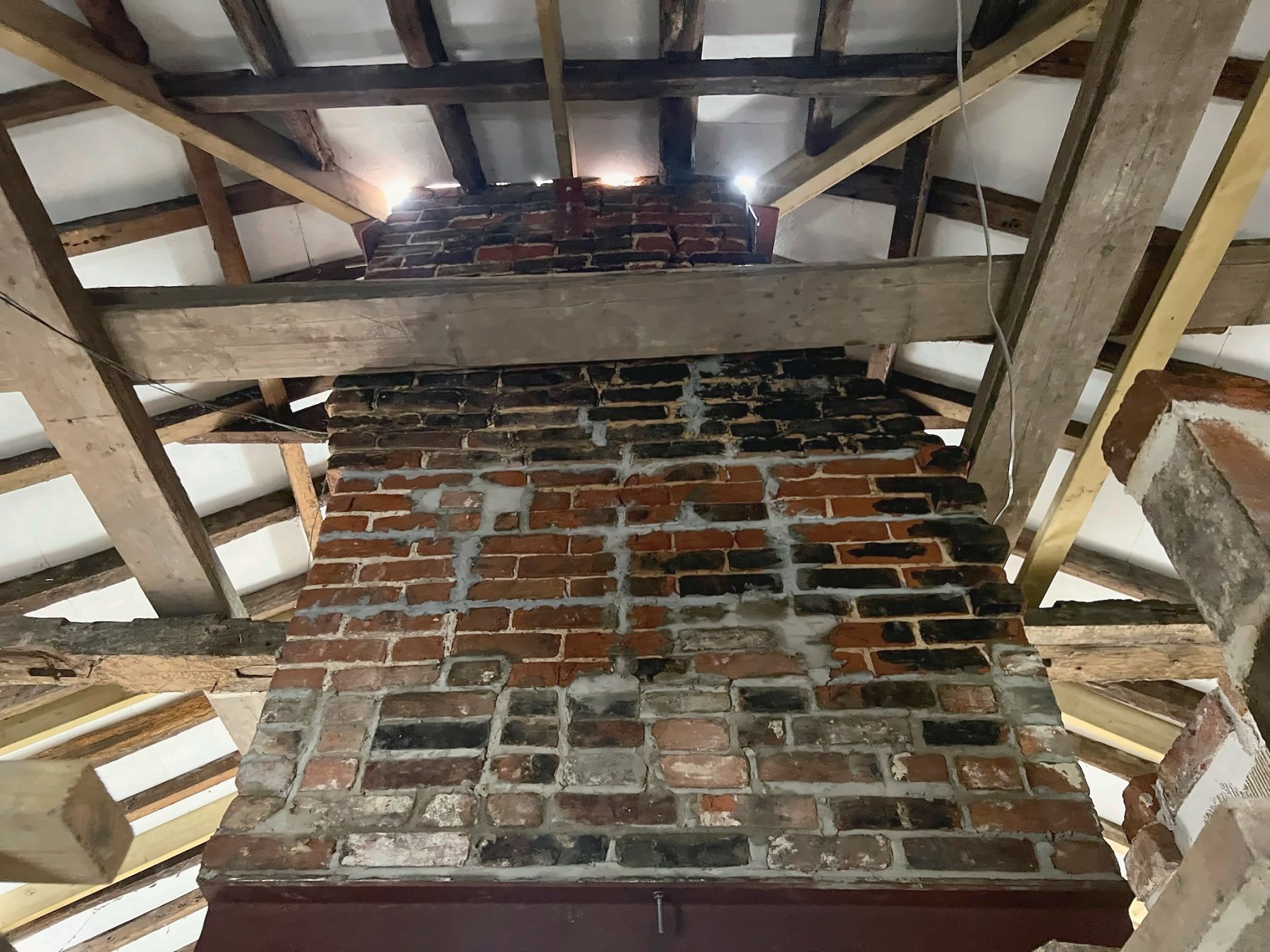
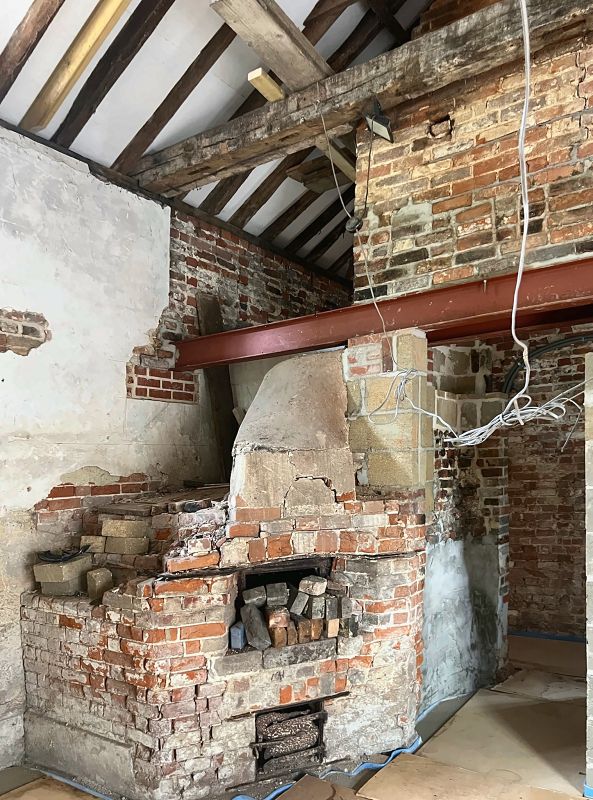
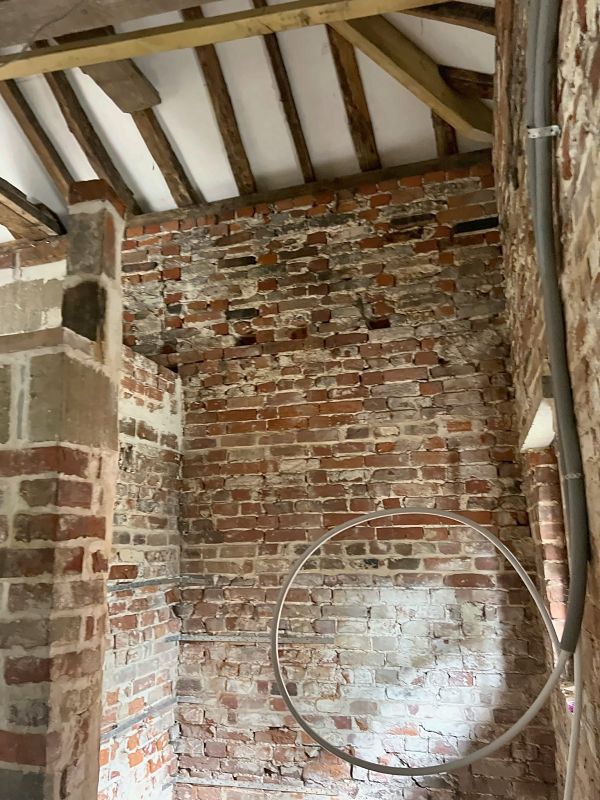
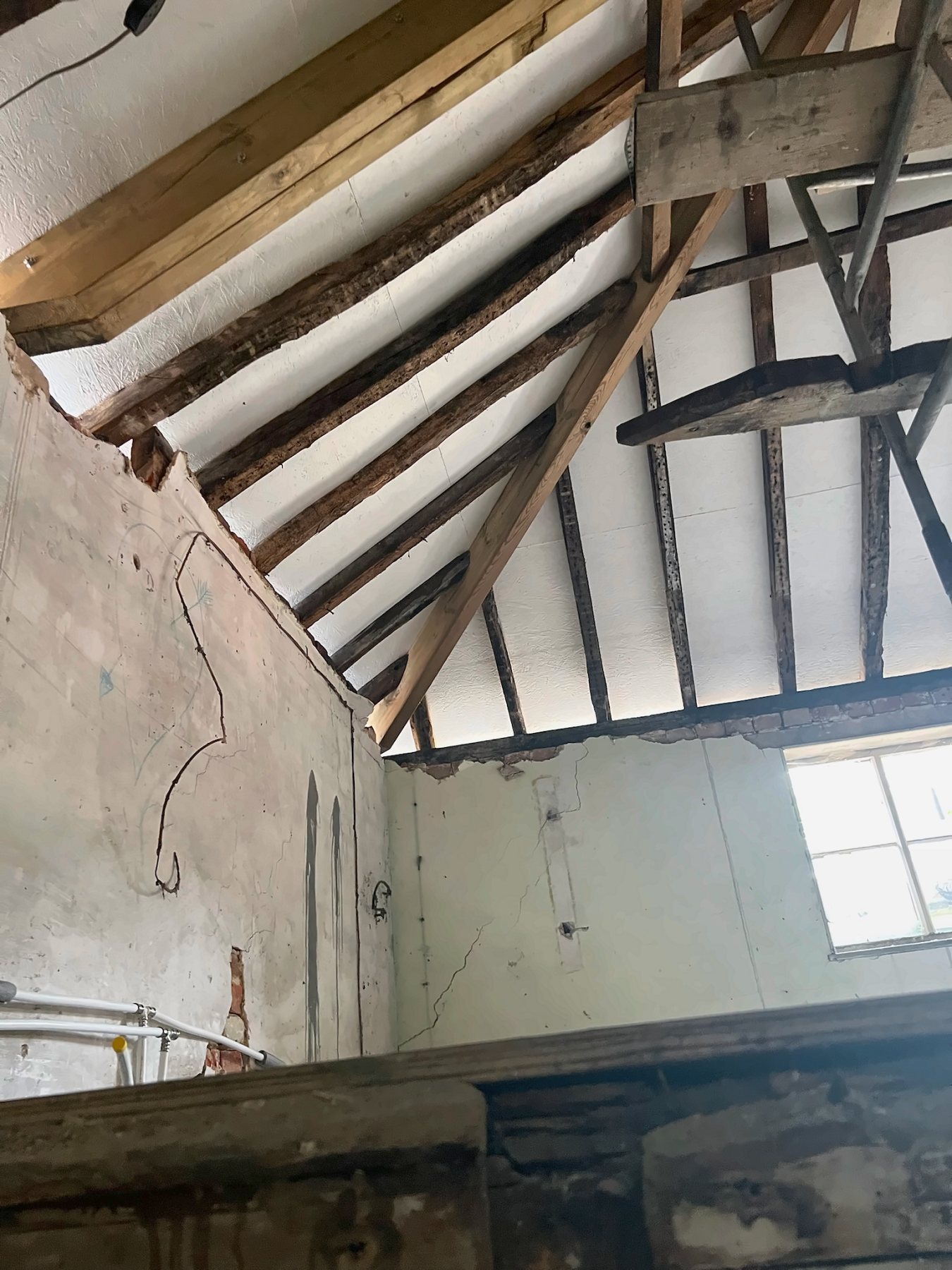
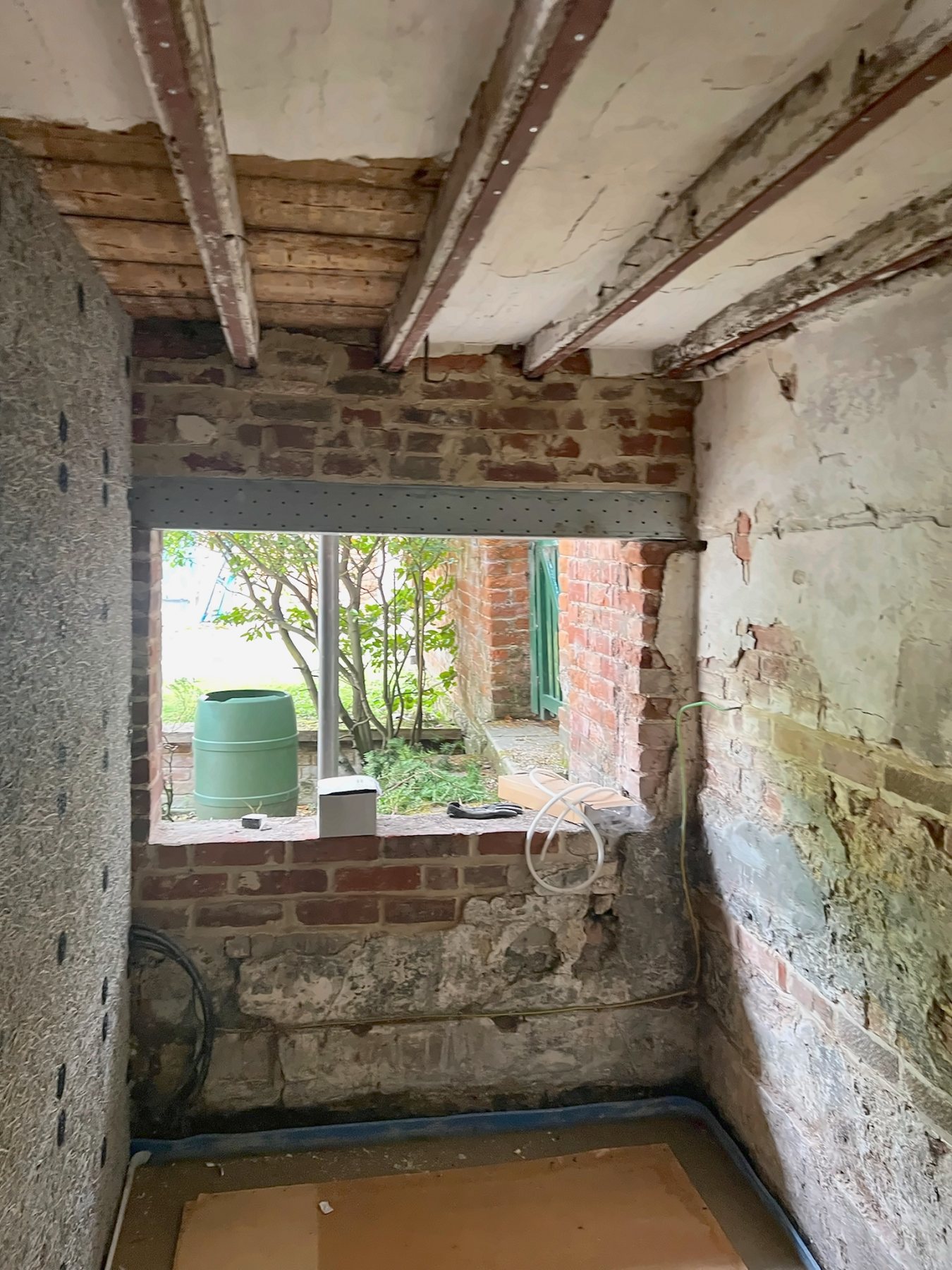
The building before and during the works. Select a photograph to enlarge.
Finished photographs to follow. These images record the building before and during the works; completed lime render photographs will be added here.
Your building, its next chapter
Planning work on an older property?
Tell us about it — listed or not. We usually reply within one to two working days.
← Back to all projects